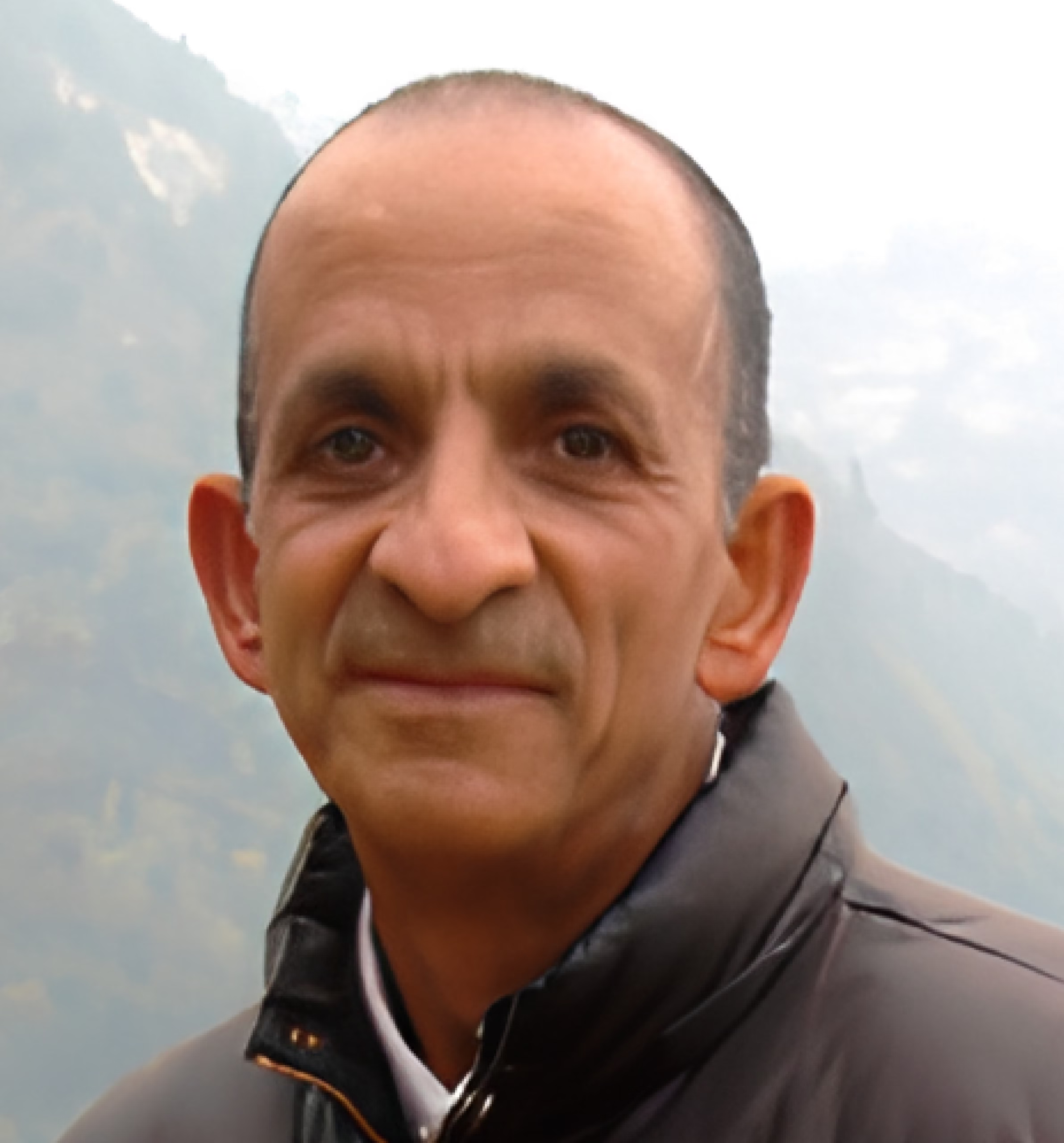
# **About Yang Burzhome**
**Writer, Blogger, and Mindset Life Coach**
Yang Burzhome is a versatile communicator and researcher dedicated to exploring the intersections of **mental health, holistic wellness, and social justice**. With over a decade of experience, he blends compassionate storytelling with strategic content creation to educate, inspire, and drive meaningful change.
### **A Lived Perspective on Culture**
Yang’s work is deeply informed by his background as an independent researcher and self-taught **cultural anthropologist**. He utilizes an “emic” approach—an immersion that allows him to understand and describe communities from the perspective of their own members. This commitment to authentic understanding is rooted in seven years of field study living among tribal societies in **Bhutan, Nepal, and the Himalayan state of Sikkim**.
### **Writing & Content Expertise**
As an expert ghostwriter and author, Yang specializes in crafting narratives that resonate with diverse audiences across various platforms. His expertise includes:
* **Mental Health:** Creating research-backed, trauma-informed narratives designed to destigmatize healing journeys.
* **Holistic Wellness:** Developing practical guides on mindfulness, nutrition, and sustainable living.
* **Social Justice & Geopolitics:** Writing persuasive articles and books that advocate for systemic change and amplify marginalized voices.
* **Professional Content:** Tailoring SEO-driven blogs, long-form editorial content, and eBooks for life coaches, wellness brands, and non-profit organizations.
### **Notable Works**
Yang’s published titles reflect his broad intellectual range, from complex geopolitical investigations to scientific wonder for children:
* ***Al Jazeera: Voice of the Global South***: A riveting investigation into narrative sovereignty and the battle for global information.
* ***Bedtime Science Stories of Stardust, Evolution and Our Cosmic Family***: A science-backed narrative for curious children (ages 8-11) that explores our connection to the universe through evidence and wonder.
* ***Pathology of Love***: A synthesis of sociology, philosophy, and radical politics that examines how contemporary societal structures impact human connection.
* ***Blueprint for Grassroots Revolution in Turkey***: A strategic field guide focused on reclaiming democracy and dismantling authoritarian structures.
### **Mindset & Life Coaching**
Beyond the page, Yang serves as a **Mindset Life Coach**, helping clients navigate the pressures of modern life. He specializes in helping individuals manage **stress and anxiety**, resolve relationship conflicts, and transition toward a more mindful and mentally healthy life.
Whether through his books, blogs, or coaching sessions, Yang is committed to **transforming vision into impactful content** and empowering others to forge authentic connections with their communities.
My **emic research** in Bhutan and Nepal is a cornerstone of my work as an independent researcher and **self-taught cultural anthropologist**. This approach is defined by an immersion into a community to understand and describe its culture from the **perspective of its own members**, rather than through an external lens.
Here are the key details of this research as reflected in the sources:
* **Duration and Scope:** Over the past **three years**, I have engaged deeply with the **vibrant tribal societies of Bhutan and Nepal**. This work followed a significant period of **four years living among the diverse tribal communities of Sikkim**, a Himalayan state in India, totalling seven years of dedicated field study in the region.
* **Research Goals:** The primary objective of this immersion is to reveal the **intricate beliefs, values, and practices** that define these specific communities. By living within these societies, I am able to capture the nuances of their daily lives and social structures that might be missed by traditional, “etic” (external) observation.
* **Application in Writing:** These experiences directly inform my writing style, allowing me to blend **compassionate storytelling with strategic insight**. For example, my work often focuses on **amplifying the voices of marginalized communities** and advocating for systemic change, a commitment rooted in the authentic connections forged during my time in the Himalayas.
* **Interdisciplinary Approach:** I integrate these anthropological findings with other disciplines, such as **sociology and existentialist philosophy**, to explore broader human themes. This is evident in my book *Women: The Gateway of Love*, which utilizes cultural anthropology to challenge patriarchal and colonial narratives by reclaiming the female body as a “sacred text” of wisdom.
This period of emic immersion has been essential in developing my **trauma-informed and empathetic approach** to content creation, ensuring that the narratives I craft for life coaches, wellness brands, and non-profits are grounded in a deep, lived understanding of human connection and cultural identity.
My **emic research** in Bhutan and Nepal is a cornerstone of my work as an independent researcher and **self-taught cultural anthropologist**. This approach is defined by an immersion into a community to understand and describe its culture from the **perspective of its own members**, rather than through an external lens.
Here are the key details of this research as reflected in the sources:
* **Duration and Scope:** Over the past **three years**, I have engaged deeply with the **vibrant tribal societies of Bhutan and Nepal**. This work followed a significant period of **four years living among the diverse tribal communities of Sikkim**, a Himalayan state in India, totalling seven years of dedicated field study in the region.
* **Research Goals:** The primary objective of this immersion is to reveal the **intricate beliefs, values, and practices** that define these specific communities. By living within these societies, I am able to capture the nuances of their daily lives and social structures that might be missed by traditional, “etic” (external) observation.
* **Application in Writing:** These experiences directly inform my writing style, allowing me to blend **compassionate storytelling with strategic insight**. For example, my work often focuses on **amplifying the voices of marginalized communities** and advocating for systemic change, a commitment rooted in the authentic connections forged during my time in the Himalayas.
* **Interdisciplinary Approach:** I integrate these anthropological findings with other disciplines, such as **sociology and existentialist philosophy**, to explore broader human themes. This is evident in my book *Women: The Gateway of Love*, which utilizes cultural anthropology to challenge patriarchal and colonial narratives by reclaiming the female body as a “sacred text” of wisdom.
This period of emic immersion has been essential in developing my **trauma-informed and empathetic approach** to content creation, ensuring that the narratives I craft for life coaches, wellness brands, and non-profits are grounded in a deep, lived understanding of human connection and cultural identity.
The **emic research** conducted in Bhutan, Nepal, and Sikkim was instrumental in shaping the foundational themes of ***Women: The Gateway of Love***. By utilizing the lens of **cultural anthropology**—the core discipline of this field study—the book provides a profound reimagining of human existence.
The research influenced the book in several specific ways:
* **Challenging Dominant Narratives:** The emic approach, which focuses on understanding a culture from the internal perspective of its members, allowed the book to actively **challenge patriarchal and colonial narratives**. By looking beyond external biases, the work seeks to reclaim the female body as a “sacred text” and a source of profound metaphysical wisdom.
* **Integrating Anthropology and Philosophy:** The book blends the findings of **cultural anthropology** with sociology and existentialist philosophy. This interdisciplinary approach, rooted in years of observing the “intricate beliefs, values, and practices” of Himalayan tribal societies, helps frame the **spiritual and metaphysical dimensions** of womanhood.
* **Love as a Radical Praxis:** The research’s focus on social justice and the struggles of communities informed the book’s argument that love is a **political force**. It presents love not just as a sentiment, but as a “radical praxis” for **dismantling power structures**, healing trauma, and building solidarity within communities.
* **Empathy and Narrative:** The experience of living among diverse tribal communities for seven years developed a **trauma-informed perspective**. This influence is evident in the book’s goal of using storytelling to foster mutual aid and communal healing.
Love functions as a **radical political force** by serving as a “radical praxis” for **dismantling entrenched power structures**, including capitalism, patriarchy, and systemic white supremacy. Rather than being viewed as a mere sentiment, love is defined as the **highest ethical manifestation of human interconnectedness**, extending care from the individual level to the entire global community. Prevailing systems of power actively seek to **disrupt this unity**, as they rely on **fragmenting the collective** to sustain their dominance. Consequently, love becomes a tool for **healing trauma** and building communities grounded in **mutual aid and solidarity**. The “Pathology of Love” suggests that modern societal structures have systematically **stifled and commodified** our capacity for deep connection, making the reclamation of authentic love an act of resistance against **institutional decay**. Finally, love manifests as a powerful source of **human solidarity and compassion** that empowers individuals to confront violent ideologies and global injustices.